
In the world of industrial surplus, "Circular Economy" sounds like a simple loop. However, at stokarti.com, we know that the path from a retired machine to a reused asset is paved with psychological and logistical obstacles.
The Subjectivity of Value
The value of a commercial asset is rarely fixed; it is dictated by shifting demand. Whether it is a pair of blue jeans or a heavy-duty factory machine, utilization depends entirely on the user's motive.
The Fashion Element
In consumer goods, "newness" is currency. Pristine garments are often discarded simply because the fashion cycle moved on.
The Cost of Running
In industrial goods, efficiency is value. Rising energy costs or maintenance burdens turn functional machines into financial liabilities.
Core Barriers: Functional vs. Economic Life
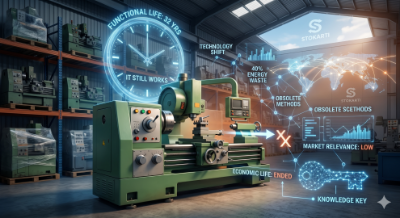
One of the biggest hurdles is the "Functional Trap." Just because a machine can run doesn't mean it should run. Owners often wait too long—sometimes 30 years—to sell, missing the window where the asset still has market relevance.
The Knowledge Gap
Knowledge is the ultimate key to upcycling. Many assets are scrapped because the owner lacks the data to know where that product fits in another industry. This is where platforms like stokarti.com bridge the gap, connecting surplus with specific industrial needs.
The Deadline of Innovation
The circular economy is a race against time. As industrial methods evolve and regional energy costs shift, a machine that is a burden in one location could be a vital asset in another. However, if the owner waits for the "perfect moment," the logistics costs will eventually outweigh the machine's depreciated value.
Maximize Your Asset Lifecycle
Don't wait 30 years to clear your warehouse. Turn your idle inventory into capital while it still holds economic value.
List on stokarti.com Today